

In brief
This article touches upon few proposals in the Union Budget 2026-27 which aims to take the country towards the above objectives.
In today’s fast-moving world, the global trade scenario is no longer as smooth or predictable as it used to be. We are living through a time that many describe as a roller coaster, where the old rules of global trade are being rewritten almost on daily basis. Between the sudden hikes in tariffs by major economies, weaponisation of supply chains and the rush to sign new trade deals, the ground is constantly shifting.
India is responding to the above challenges through policies to build structural resilience to achieve domestic self-reliance and reduced dependence on imports, while simultaneously deepening its integration with world markets. By this approach, India aims to insulate its economy from global shocks caused by tariff and trade disruptions.
This article touches upon few proposals in the Union Budget 2026-27 which aims to take the country towards the above objectives.
The dual strategy: Diplomacy and Indigenization
Leveraging its huge market, India is entering into Free Trade Agreements with various countries and blocs bilaterally. Such agreements secure greater market access for India’s goods and services overseas. They also help to stabilize the sourcing and cost of essential imports by acting as a ‘trade insurance’ to bypass unilateral tariff hikes by any country.
While Free Trade Agreements act as powerful engines for export growth, they simultaneously serve as a conduit for foreign consumer goods to enter the Indian market with reduced import duties. This open-door policy not only benefits domestic consumers by providing them a variety of choice, but also compels local manufacturers to bridge the gap in innovation and scale to maintain their market share.
Further, building on the policy in previous budgets such as ‘Aatmanirbhar Bharat’, Union Budget 2026-27 focuses on specific sectors to create self-sufficiency in essential goods such as rare earth minerals. This is sought to be achieved by strategic reduction of import duties on inputs and components required to undertake manufacturing in India. By lowering the cost of essential inputs, the government attempts to effectively subsidize the manufacturing process, encourage domestic value addition and make Indian-made goods more competitive in both local and international markets.
Reimagining industrial capability
The manufacturing sector is witnessing a pivot to make India a powerhouse and hub of manufacturing. The budget places significant emphasis on sectors that are not only critical but also vulnerable to any fluctuation in the supply chain, such as rare earth minerals, semiconductors and biopharmaceuticals. By fostering local technology ownership and establishing domestic clinical trial networks, India is moving away from being a mere generic manufacturer to becoming a centre for innovation.
The aviation sector serves as a prime example of this analytical shift. By providing incentives on the import of specialized inputs for manufacturing aircraft / aircraft parts as well as exemptions on raw materials for defence-related MRO inputs, the government is attempting to capture the high-value aerospace market. This move focuses to turn India into a production hub and reduces dependence on foreign manufacturers.
The Budget also introduces targeted schemes such as establishment of ‘Rare Earth Corridors’ in mineral-rich states like Odisha and Tamil Nadu to promote local mining and processing of essential minerals.
The chemical sector can expect three dedicated Chemical Parks to enhance domestic production which will cut down on import expenditure. By making these items locally, India can better handle the sudden price swings or supply shortages that often happen in the global market.
Services and the ‘Orange Economy’
While India has long been a global leader in the service sector, the current Budget envisages a move toward diversification. The focus is no longer restricted to traditional IT services. Instead, the government is looking to boost ancient India yoga, ayurveda and animal husbandry for it to reach its full potential.
Target is also being shifted to the ‘Orange Economy’ comprising animation, visual effects, and gaming alongside a massive expansion in allied designing industry. This represents an attempt to leverage India’s demographics by creating a job market that is less susceptible to the automation risks currently threatening the service sector.
Infrastructure: A trade catalyst
A critical bottleneck for India’s road to self-reliance has historically been the lack of required infrastructure including high cost of logistics. Merely building on domestic manufacturing and service sector is not sufficient unless it is backed by infrastructure and logistical support.
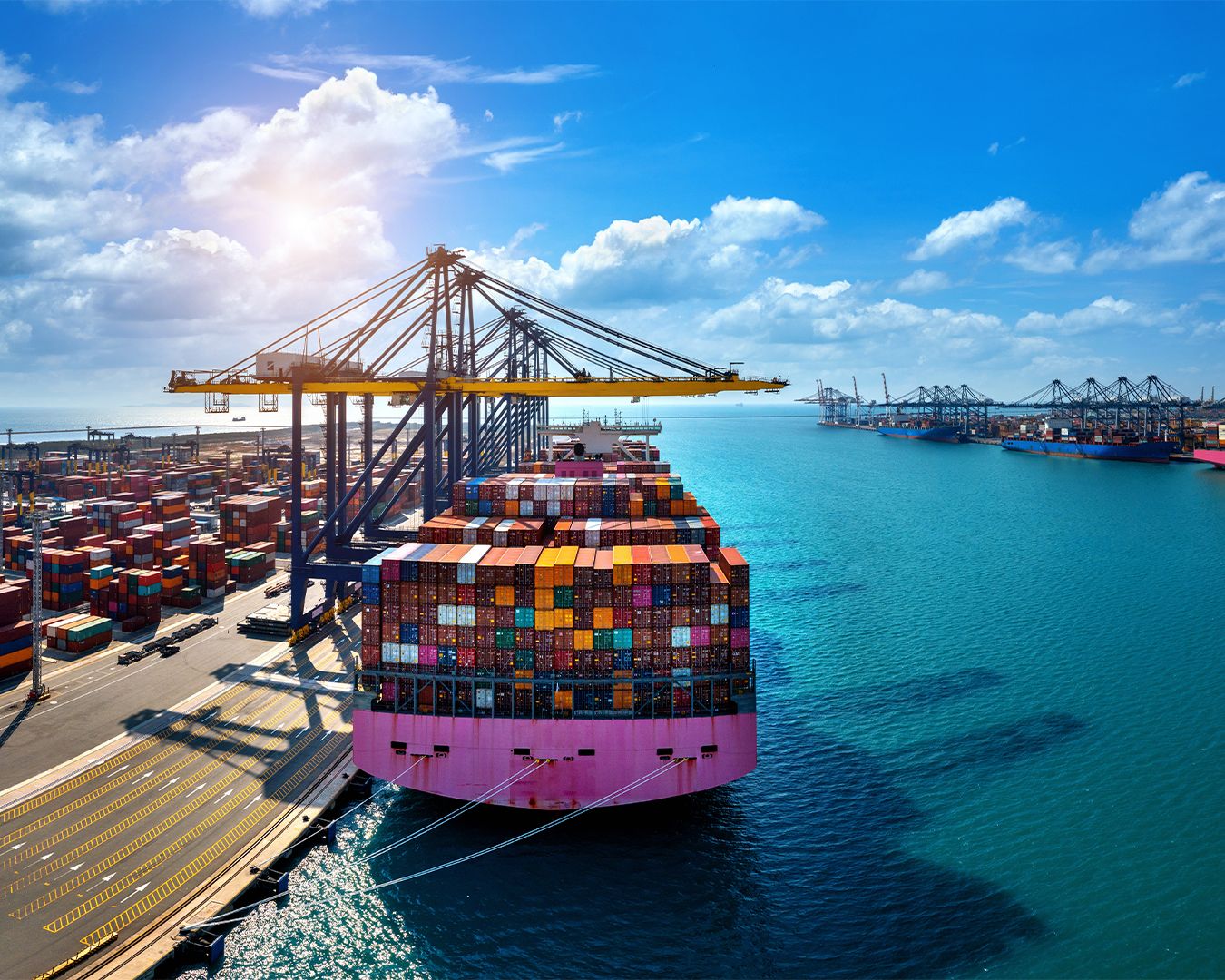
To eliminate the invisible tax of high shipping cost, the Budget has proposed initiative to manufacture shipping containers domestically and the development of new dedicated freight and rail corridors. This will not only improve the movement of goods in terms of cost and time but also will make it easier for domestic manufacturers to indigenous goods competitive globally.
To conclude, the 2026-27 Budget reasserts the ‘Aatmanirbhar Bharat’ initiative as a shield against today’s global trade volatility. By pushing indigenization of critical technologies and strengthening domestic supply chains, the government is effectively ‘tariff-proofing’ the economy. These measures not only insulate India from external shocks but also reinforce its foundation for an unhindered path toward becoming a developed nation. In a fragmented trade environment, real sovereignty lies in a resilient domestic market.
[The authors are Associate Partner and Associate, respectively, in Customs practice at Lakshmikumaran & Sridharan Attorneys]
Related Articles

Verification First, SCN Later: Re centring FTA origin checks
Disha Bhandari+109 Mar 2026
Availing GST credit using TR-6 Challan: Navigating the uncertainty
Asish Philip Abraham+327 Feb 2026
Discuss this topic with our Customs team
Contact Us